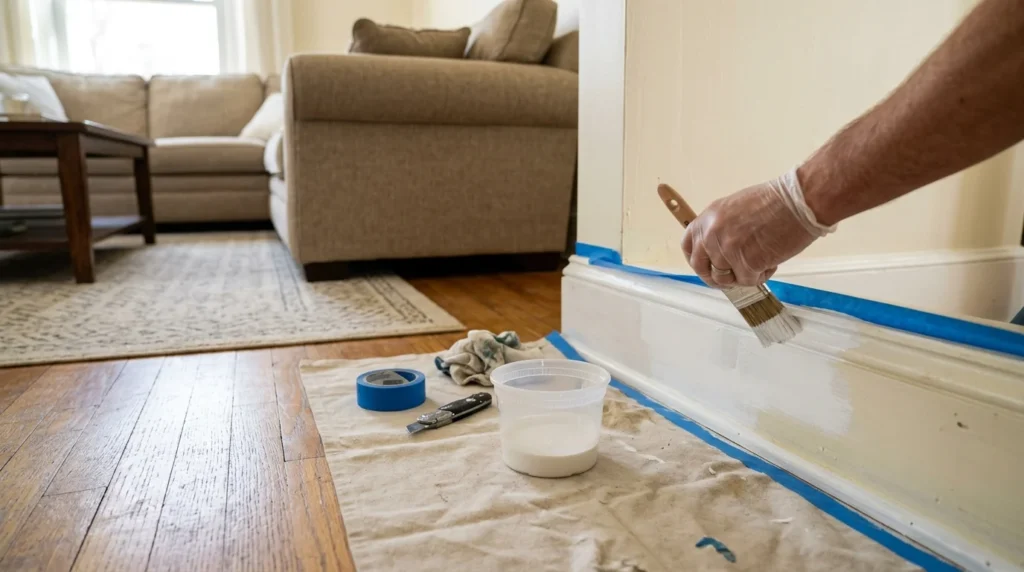
To paint on baseboard trim cleanly and straight without removing it, clean off the dust, scuff-sand the surface lightly, mask the floor with painter’s tape, and apply a durable trim paint. Knowing the right way to paint on baseboard surfaces ensures a smooth finish without pulling wood off the wall, which usually damages drywall and creates unnecessary caulking work.
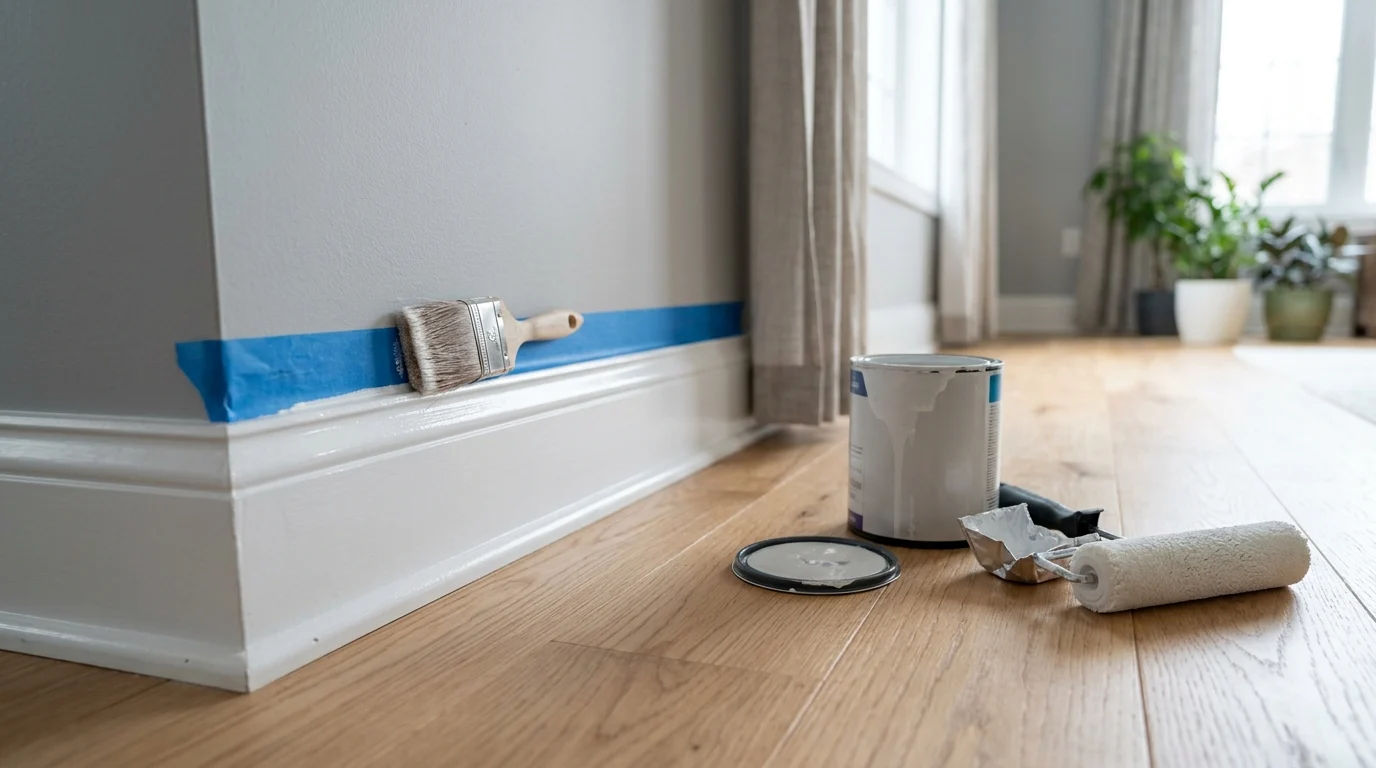
Why Baseboard Paint Choice Matters More Than You Think
Baseboards take more daily abuse than almost any other painted surface in your home. They get hit by vacuum cleaners, kicked by shoes, collect pet hair, and gather dust continuously. Using a standard interior flat or eggshell wall paint when you paint on baseboard trim is a common mistake that leads to scuffs that cannot be scrubbed off without removing the finish.
For baseboards, satin or semi-gloss finishes are the industry standard. Semi-gloss provides a smooth, durable shell that resists scuffs and wipes clean with a damp cloth. Satin offers a slightly softer look with less sheen while still offering enough moisture and scrub resistance for high-traffic hallways and living rooms.
When selecting products to paint on baseboard areas:
- Water-based Acrylic Alkyd Hybrids: Offer the smooth, self-leveling finish of traditional oil-based paint without the yellowing or strong odors, and they clean up easily with water.
- 100% Acrylic Latex: Dries quickly, low odor, and stays flexible enough to prevent cracking along seams where trim meets wall.
- Oil-Based Enamel: Highly durable, but prone to yellowing over time in low-light rooms and requires mineral spirits for cleanup.
In terms of cost, a single gallon of high-quality trim paint typically costs between $45 and $75. One gallon easily covers up to 400 square feet—more than enough to paint on baseboard trim throughout an entire average-sized home.
Essential Tools and Materials
Before starting your project, gather the right equipment. Using the wrong brush or cheap masking tape is the primary reason homeowners end up with paint bleeding onto carpet or hardwood when applying paint on baseboard edges.
- 2-inch Angled Sash Brush: A medium-stiff nylon/polyester blend brush lets you cut clean lines along edges and into tight corners.
- Painter’s Tape: Blue tape for standard wood floors/walls, or delicate-surface yellow tape if applying over recently painted walls.
- Carpet Guard or Wide Putty Knife: Essential for pushing carpet down away from the bottom edge of the trim.
- Fine-Grain Sanding Sponge (120 to 220 grit): Necessary for dulling existing glossy finishes so new paint on baseboard wood adheres properly.
- TSP (Trisodium Phosphate) or Degreasing Cleaner: Removes oils, foot grime, and dirt.
- Acrylic Latex Caulk & Caulking Gun: To seal gaps between the wall and top edge of baseboards before painting.
Step-By-Step: Painting Baseboards Cleanly On the Wall
Learning how to apply paint on baseboard trim installed on the wall saves hours of labor compared to prying trim off, but it requires careful surface preparation and precise taping.
1. Clean and Scrub Thoroughly
Dust and shoe scuffs prevent fresh paint on baseboard moldings from bonding correctly. Wipe down the entire length of the baseboards using a wet rag dipped in a mild TSP solution or dish soap mixture. Let the wood dry completely before moving forward.
2. Sand Lightly to Degloss
If the current surface has any shine, fresh paint on baseboard wood won’t stick well to it without prep. Pass a fine 180-grit sanding sponge over the trim to dull the surface polish. You aren’t stripping the old layer off—just creating microscopic scratches (a “key”) for the new coating to grip onto. Vacuum up the sanding dust and wipe with a damp microfiber cloth.
3. Mask the Floors and Fill Gaps
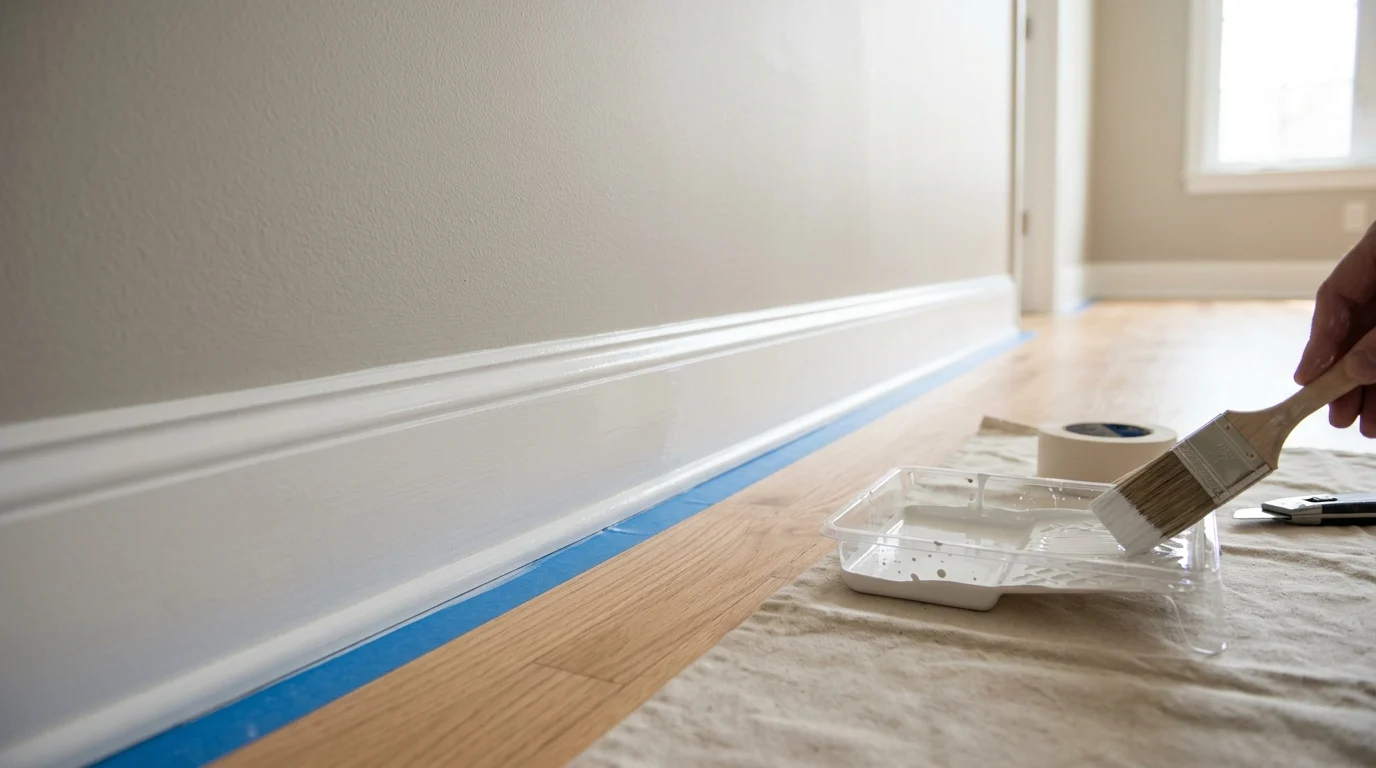
Place painter’s tape along the floor right up against the bottom of the trim before you apply paint on baseboard sections:
- For Hardwood/Tile: Lay tape flat along the floor tight to the trim. Run a plastic putty knife or fingernail firm along the tape edge to burnish it, preventing paint bleed under the seam.
- For Carpet: Place 2-inch tape on the carpet edge, tucking it down slightly underneath the baseboard lip using a wide putty knife. Alternatively, use a broad plastic shield moved progressively along as you paint.
Run a thin bead of paintable acrylic latex caulk along the crack between the top of the baseboard and the wall. Smooth it with a damp finger. This hides dark shadow lines and creates a seamless, professional finish when you apply paint on baseboard trim.
Painting Technique: Avoiding Lap Marks and Drips
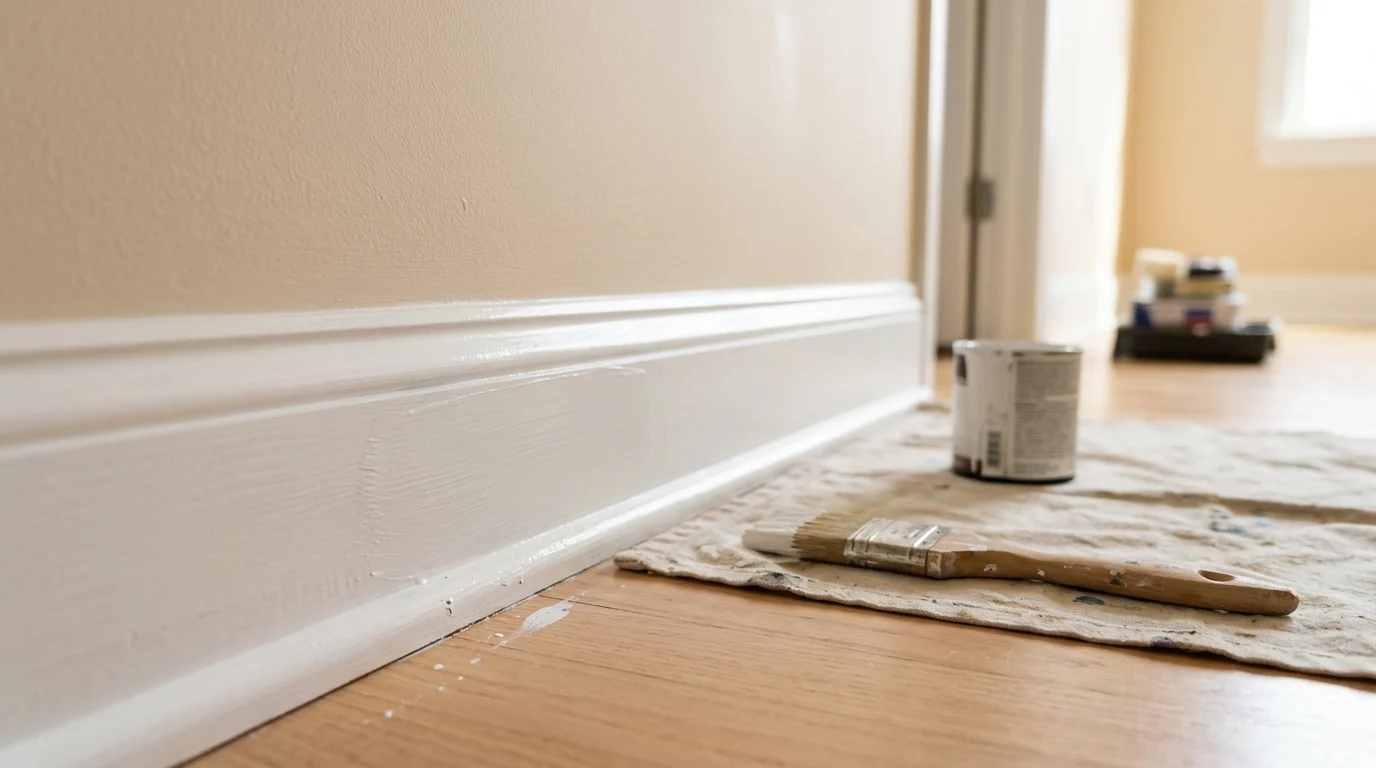
The key to a streak-free coat on trim is maintaining a “wet edge” and loading the brush properly when applying paint on baseboard surfaces.
- Dip the Brush Correctly: Submerge only the bottom 1/3 to 1/2 of your angled brush into the paint can or kettle. Tap the inside edge of the bucket gently to remove excess—never scrape the brush dry across the rim, which strips out the paint needed for smooth application.
- Work in 2 to 3 Foot Sections: Start at one corner and paint toward an exit. Apply paint on baseboard top edges first to establish a clean line against the wall.
- Smooth Out Long Strokes: Fill in the center and lower profile, then finish the section with long, light, continuous strokes in the direction of the wood grain before the paint begins to set up.
- Apply Two Thin Coats: Avoid applying heavy coats to finish in one pass; heavy layers of paint on baseboard trim drip, sag, and pool along the bottom edge against the floor. Allow the first coat to dry according to manufacturer guidelines (usually 2 to 4 hours) before applying a light second coat.
Modern Baseboard Trends and Rules of Thumb
Baseboard styles and proportions have shifted significantly away from small 2.5-inch contractor-grade builder trim.
The “7% Rule” for Trim Proportions
An established interior design rule of thumb for trim proportions is the 7% Rule: your baseboards should measure roughly 7% of your total room ceiling height.
- 8-foot ceilings: ~6.5 to 7-inch baseboard height
- 9-foot ceilings: ~7.5-inch baseboard height
- 10-foot ceilings: ~8.5-inch baseboard height
While older homes often feature 3.5-inch trim regardless of ceiling height, upgrading to taller trim gives rooms a grounded, high-end feel before you paint on baseboard surfaces.
Current Color Trends
The historic tradition of applying bright white paint on baseboard trim is evolving:
- Monochromatic / Color-Drenched Rooms: Applying the exact same wall color as paint on baseboard trim, doors, and walls (often varying only the finish—e.g., flat on walls, satin on trim) makes small rooms look larger and eliminates jarring visual breaks.
- High-Contrast Dark Trim: Charcoal, muted navy, sage green, or deep greige paint on baseboard trim set against warm off-white walls creates a bold architectural framing effect popular in modern farmhouse and transitional interiors.
Frequently Asked Questions
Is it a good idea to paint baseboards?
Yes, painting baseboards is one of the most cost-effective ways to freshen up a room. A clean coat of trim paint instantly brightens a space, hides accumulated scuffs, and protects the underlying wood or MDF from moisture damage and everyday wear.
Can I paint baseboards without removing them?
Yes, painting baseboards while installed on the wall is the standard method used by professional painters. Removing baseboards often damages the surrounding drywall, breaks fragile trim pieces, and requires tedious re-nailing and hole filling. Masking the floor properly achieves the same clean result with far less risk.
What is the easiest way to paint a baseboard?
The easiest method is using a 2-inch angled sash brush combined with proper masking. Clean the surface first, tuck painter’s tape tightly underneath the bottom trim edge (or push carpet back with a shield), apply a thin coat along the top edge, and brush out the middle in smooth, continuous horizontal strokes.
Should baseboards match the wall color or door trim?
Traditionally, baseboards match the interior door casings and window trim to form a continuous border throughout the house. However, painting baseboards the same color as the walls (monochromatic trim) is increasingly popular because it creates clean visual lines and makes ceilings feel taller.
The Bottom Line on Painting Baseboards
You don’t need to strip trim off your walls to get factory-clean lines on your baseboards. Focus your effort on thorough cleaning, light sanding, and careful tape placement at the floor line. Invest in a dedicated satin or semi-gloss trim paint rather than using standard wall paint, take your time with a quality angled brush, and apply two light coats for a durable finish that will withstand years of foot traffic.
Leave a Reply